Selected as a Monad validator – Foundation Delegation Program, Wave 2 Learn more →

Transparent. Engineered for Reliability.

Physical infrastructure since 2017 – Bitcoin mining · 3,000+ GPU peak · now AI compute.

Hardware-Driven Reliability

Bare-metal servers across continents, tuned for stability and uptime.

Infrastructure Expertise

From GPU mining rigs to validator clusters - we understand blockchain at its core.

Automated Monitoring

Custom observability stack with predictive analytics and instant alerting.

Who We Are

Infrastructure engineers with nearly a decade of hands-on hardware experience – from Bitcoin mining containers to AI compute clusters.

Mining Heritage

Bitcoin mining since 2017 on our own hardware and in our own containers. Scaled to a 3,000+ GPU facility between 2018–2021. Firmware tuning, thermal optimization, energy efficiency, and 24/7 uptime – battle-tested at scale.

AI Compute

Our current focus. Operating a private mini data center with GPU clusters optimized for AI inference workloads. A direct evolution of mining expertise – same discipline, new applications.

PoS Infrastructure

Operate Ethereum validators and support liquid-staking ecosystems, including Lido. Run validators across Starknet, Dymension, Lava, Nibiru, Celestia, and Monad. Enterprise-grade key management and slashing protection.

0

Supported Networks

0

Uptime %

0

Countries

0

Delegators

Data Centers & Mining

AstroSynx is a collective of infrastructure engineers and blockchain enthusiasts with nearly a decade of hands-on experience in hardware and distributed systems. The journey began in 2017 with large-scale Bitcoin mining setups and evolved into a private GPU-mining facility running over 3,000 graphics cards between 2018-2021.

Over those years we mastered firmware tuning, thermal optimization, and power efficiency to deliver 24/7 uptime across remote facilities. When Ethereum moved to Proof-of-Stake in 2022, we expanded into validator operations - advancing our key management, slashing protection, and PoS-native monitoring.

Today, AstroSynx operates validators and full nodes across Ethereum, Starknet, Dymension, Cosmos, Lava, Realio, Selfchain, and Nibiru - on physically owned servers with strict network segmentation and fully auditable monitoring. Our principle is simple: consistency and reliability proven in practice.
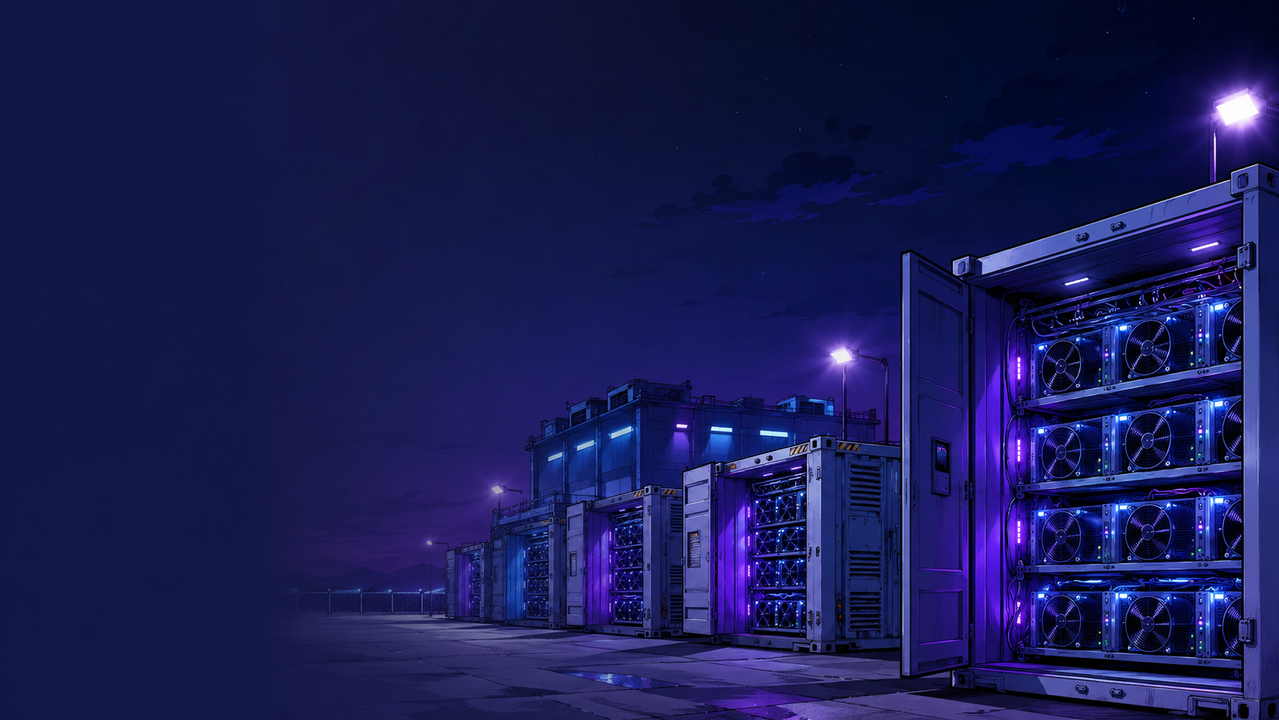
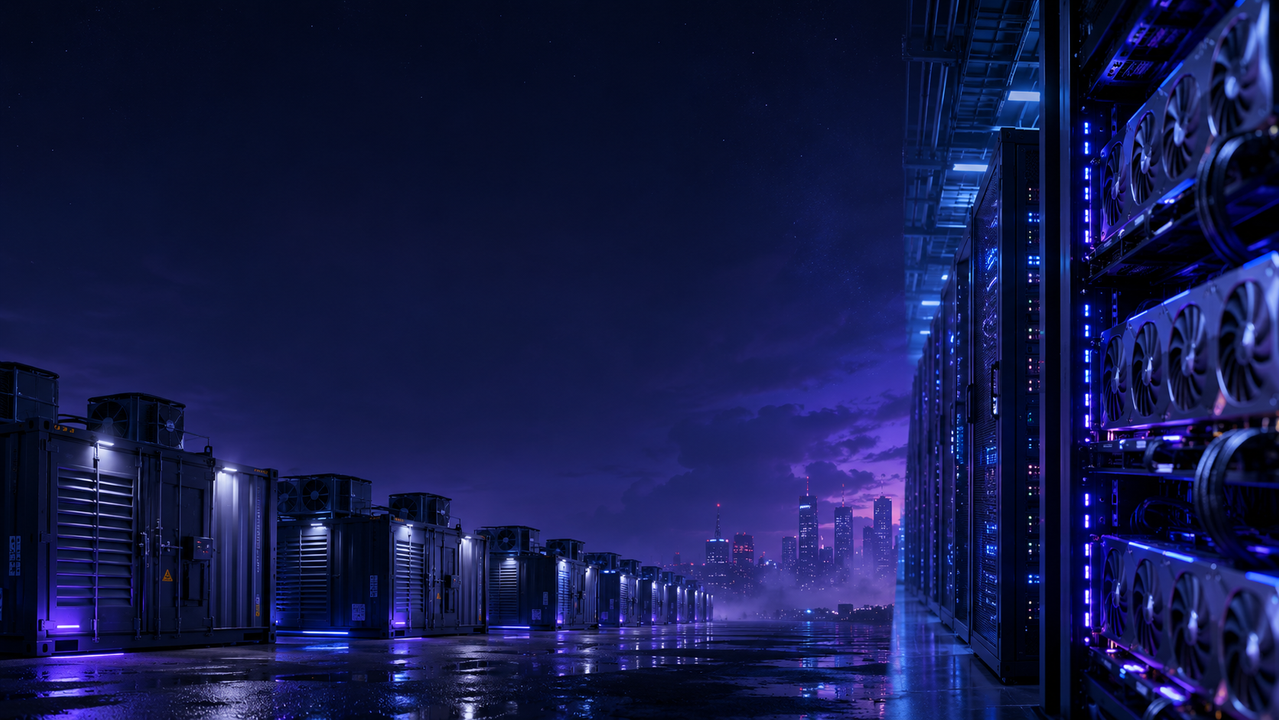
AstroSynx Data Center

The Evolution of Cryptocurrency Mining

A condensed overview of how mining evolved from a hobby to an engineered discipline – exploring key configurations, infrastructure safety, and automation.

From hobby to industry. In the early days, mining was performed on personal computers using CPUs and GPUs. As network difficulty grew, dedicated ASICs emerged, transforming mining into an industrial-grade operation focused on efficiency per watt and long-term uptime.

Hardware configurations. Typical GPU setups include motherboards with multiple PCIe slots, efficient 80+ certified power supplies, GPUs with ≥10 GB VRAM, and open-frame rigs for cooling. ASIC-based farms rely on three-phase electrical infrastructure, advanced air or immersion cooling, and centralized monitoring with safety shutdown systems.

Safety and uptime. Continuous 24/7 operation demands redundant power (UPS + generators), proper airflow, temperature control, and real-time telemetry. Network and facility security combine VPN isolation, firewalls, CCTV, and environmental sensors to prevent downtime or intrusions.

Automation and AI. Modern mining integrates intelligent monitoring systems such as Prometheus + Grafana or Hive OS, automatic voltage and frequency scaling, predictive maintenance based on ML models, and AI-driven pool switching for optimal efficiency. These systems can cut energy use by up to 12 % while improving uptime beyond 99.8 %.

Why infrastructure defines competitiveness. Mining today is an engineering discipline – a balance of hardware design, power management, and automation. Success depends on resilient systems, energy optimization, and the ability to adapt to changing network and market conditions.

Core operational principles:

  • Redundant power and cooling design;
  • Continuous monitoring and instant alerts;
  • Predictive maintenance and automated performance tuning;
  • Energy efficiency and renewable integration where possible.

Our Vision

Decentralization is only as strong as its infrastructure. AstroSynx exists to make networks more robust and autonomous - through secure validation, predictable uptime, and continuous research into infrastructure performance.

Validator Operations

Last updated: 3 minutes ago

DA Resilience Observatory

Our contribution to Celestia decentralization

Live decentralization metrics, resilience simulation, node mapping, and infrastructure analysis for the Celestia network. Interactive outage simulator with Nakamoto coefficient tracking.

Explore the Observatory →
Monad

Monad Resilience Observatory

Network health monitoring for Monad

Live validator metrics, infrastructure analysis, and decentralization tracking for the Monad network. Coming soon.

Explore the Observatory →

Automation & Security

We go beyond validation - developing our own monitoring systems, deployment pipelines, and recovery frameworks that keep networks secure and responsive.

Auto-Secure

Continuous patching, SSH key rotation, and threat detection

Health-Guard

Node telemetry, uptime analytics, and proactive alerting

Fail-Safe

Auto-rollback and fast recovery from failed upgrades

Chain-Ops

CI/CD for configuration sync and version control

Roadmap

2017 – 2021

Mining Infrastructure

Bitcoin mining on proprietary hardware. Custom containers, cooling systems. GPU farm scaled to 3,000+ cards with firmware tuning and 24/7 remote operations.

2022 – 2024

Consolidation & Retooling

Site consolidation and equipment upgrade cycle. Transition from pure mining to general-purpose compute infrastructure. Expanded into PoS validator operations.

2025 – 2026

AI Compute

Launch of private mini data center. GPU clusters optimized for AI inference workloads. Production deployments for machine learning pipelines.

2026 – 2027

Scale AI & Energy Efficiency

Expand compute capacity. Energy-efficient facility design. Explore renewable-powered infrastructure for sustainable large-scale AI operations.